
spotlight on sage
Jump to Recipe
Move over, basil. You had your turn. All summer long basil is tucked into caprese salads, muddled into cocktails, and torn to garnish many a dish. Well, it’s time for another herb to take the spotlight. Cue sage.
Most of us typically know pesto to be basil’s territory. But why limit such a wonderful sauce to just one herb?
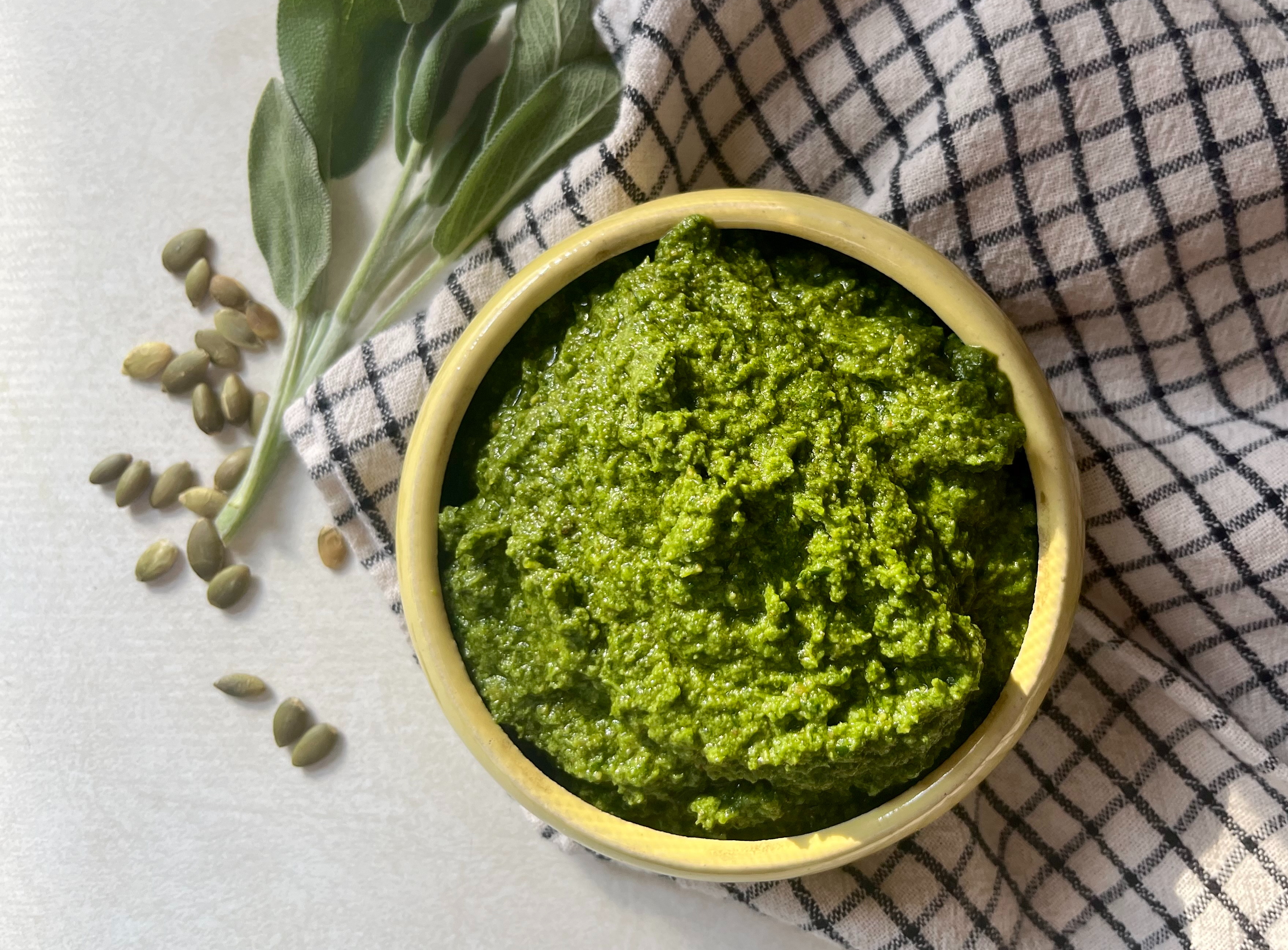
I wanted to team up the herbal brightness of a pesto with the earthy and bitterness of sage. And this pesto does just that.
Now sage is not an herb that we typically eat fresh, although it certainly can be. The reason we don’t tend to eat it fresh, however, is because sage is much more bitter than it’s sweet or peppery counterparts like basil and parsley.
Sage has more tannins than many other herbs. This means that it is more astringent – it gives a drying sensation to the mouth. To help you understand what this means, think of red wine. Red wine has more tannins than white wine. A glass of red wine might leave your mouth with a dry feeling that white wine doesn’t. That is the work of the tannins. This is the same thing that is happening when you eat a piece of fresh sage.
So, how can we avoid sage’s bitterness in a fresh-herb sauce like pesto? My secret is to cheat a little by cooking the sage just a tiny bit. Giving the sage a quick wilt before popping it into this pesto breaks down its tannins and softens its bitter bite without taking away from that earthy sage flavor.
My sage pesto also includes a bit of parsley and basil to give it a rounded out herbal flavor while still giving sage the spotlight.
Ways to Use Sage Pesto
Pasta: I love to pair this pesto with a fall gnocchi, but you could pair this with just about any pasta
Soup: add a dollop on top of a bowl of a creamy soup like squash or carrot
Pizza: replace the marinara on your pizza crust with pesto. I would pair this pesto with some mozzarella, roasted squash, sausage, and pickled fennel
Compound Butter: Mix a bit of this sage pesto in with some softened butter to create a delicious compound butter
Roasted Vegetables: jazz up any roasted vegetable with a dollop or two of pesto
Aioli: fold a bit of pesto in with your mayonnaise to create a sage aioli. I would pair it with a turkey apple sandwich
Eggs: my go-to use for this and any pesto is to put it on top of my eggs for breakfast. It can make a simple breakfast feel so elevated
Meats: Pop it on top of grilled meats like steak or chicken or even use it in a marinade

Sage Pesto
~2
cups25
minutesSage is the
Ingredients
1 cup fresh sage (30 grams)
1 bunch parsley, leaves and stems (40 grams)
3 cups fresh basil (75 grams)
1-2 cloves garlic (8 grams)
1/2 cup raw pepitas (65 grams)
3/4 cup shaved parmesan cheese (65 grams)
1 cup olive oil (200g)
1 Tablespoon apple cider vinegar (15 grams)
zest of one lemon
juice of half a small lemon (25 grams)
1/4 teaspoon black pepper
1 Tablespoon kosher salt
Directions
- Start by gently wilting the sage. This mellows out the sage’s bitterness. In a pan over medium-low heat, add a small amount of cooking oil and the fresh sage. Cook the sage just until it begins to wilt but before it turns crispy. This will take about 30 seconds to 1 minute. Transfer the sage to a cloth or paper towel to absorb any excess oil and set aside to cool.
- In the same pan that you wilted the sage, add the pepitas to toast over a medium-high heat. This will take about a minute. Once they are slightly golden remove them from the heat and set aside to cool.
- To a blender or food processor, add all the ingredients. Pulse until the pesto is close to smooth but has a grainy texture.
- Enjoy!
Notes
Leave a Reply